The Challenges of Driving in Mountain Terrain
As FRA recognizes National Safety Month this June, it’s a good time to remember that safety extends beyond the jobsite. For many forestry professionals, navigating mountain roads is a routine part of the workday. Whether accessing remote timber sales, inspecting operations, or traveling between sites, employees and contractors often encounter steep grades, sharp curves, changing road conditions, and other hazards that require constant attention. Understanding these risks and adjusting driving habits accordingly is an important part of staying safe in the field.
I was recently headed up to the woods to tire out the pup and hit a stretch of washboard so rough it had my truck skipping around the corner. Mountain driving has many hazards to be aware of, including sharp curves, recreational and commercial forest road users, steep grades, forest debris, cliffside driving, and deep mud puddles. Whether you are heading out to tire out your dog or embarking on a remote backcountry expedition, recognize that forest roads are ever-changing, high-hazard environments. This is the single most critical factor in ensuring you and your passengers make it back to the pavement safely.
One of the most common hazards forestry professionals encounter on mountain roads is steep grades. With roads reaching grades of up to 21%, it is important to use all the tools available to control a vehicle’s descent, not just the brakes. Brakes can heat and fail during long descents, especially if the vehicle is towing a trailer. There are a few ways to maintain your brakes and control speed, depending on the type of vehicle you have. In newer automatic-transmission vehicles, there is usually an option to shift into manual or low gear, which uses the transmission to slow the vehicle down. If your brakes start to get mushy or begin to smell, pull over and let them cool down.
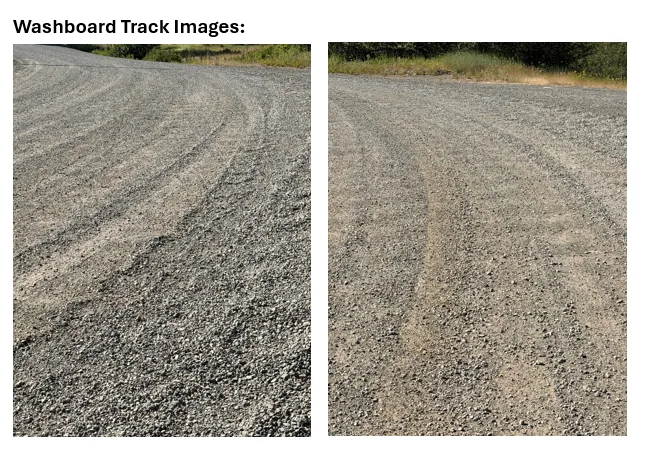
Another commonplace issue is washboards, especially around curves. Washboards are a rippling effect on the road surface, usually found on steep uphill roads or on sharp corners. They can be very dangerous for drivers because they reduce the surface contact between the tires and the road, which can cause the vehicle to skid and lose contact with the road. A few pieces of advice on managing washboards: if you are going to be out there long-term, air down your tires so they are not as bouncy and adhere to the road better. Secondly, slow down and put your car into 4H (if available); this gives you better control. Alternatively, drive on the part of the road that is not washboarded; however, this can be dangerous due to oncoming traffic (especially when driving around a blind corner).
Forest debris, such as downed trees, sloughed banks into roads, or rocks, can also be hazardous to drivers. Weather can turn previously clear roads into hazards for drivers who are not paying attention. Violent weather, animals, and defrosting can cause rocks to be dislodged into the roadway or trees to fall across roads, blocking previously clear roads. Drivers should drive cautiously and carry tools, such as crowbars and chainsaws, to remove these hazards, especially after a large weather event.
Finally, mud puddles can hide dangerous things from drivers. Sometimes it is tempting to speed up and drive through deep, road-wide puddles to see the splash. These puddles can hide multiple dangers, such as submerged boulders, limbs, deeper potholes, and sharp rocks that can puncture the sidewall. Drivers should proceed slowly through the mud puddle to reduce the impact of larger holes, submerged boulders, and limbs. If you have questions or concerns about the puddle, you can get out and check the puddle for hazards and depth.
These are just a few of the hazards that we face driving in the mountains; there are many more, including wildlife, domestic herds of cows and sheep, sharp rock and limb puncture hazards, recreational vehicle interactions, commercial vehicle interactions, fire hazards, soft shoulders, snowbanks, and sun glare, just to name a few. The first step is to recognize that driving in the woods and mountains requires preparation and expertise to navigate the hazards. Safety in the backcountry relies on a proactive mindset. Ultimately, respect for the terrain, thorough preparation, and continuous situational awareness are what will ensure you navigate the mountains safely and return home.
Additional Resources:
Forest Service Driving in the Woods:
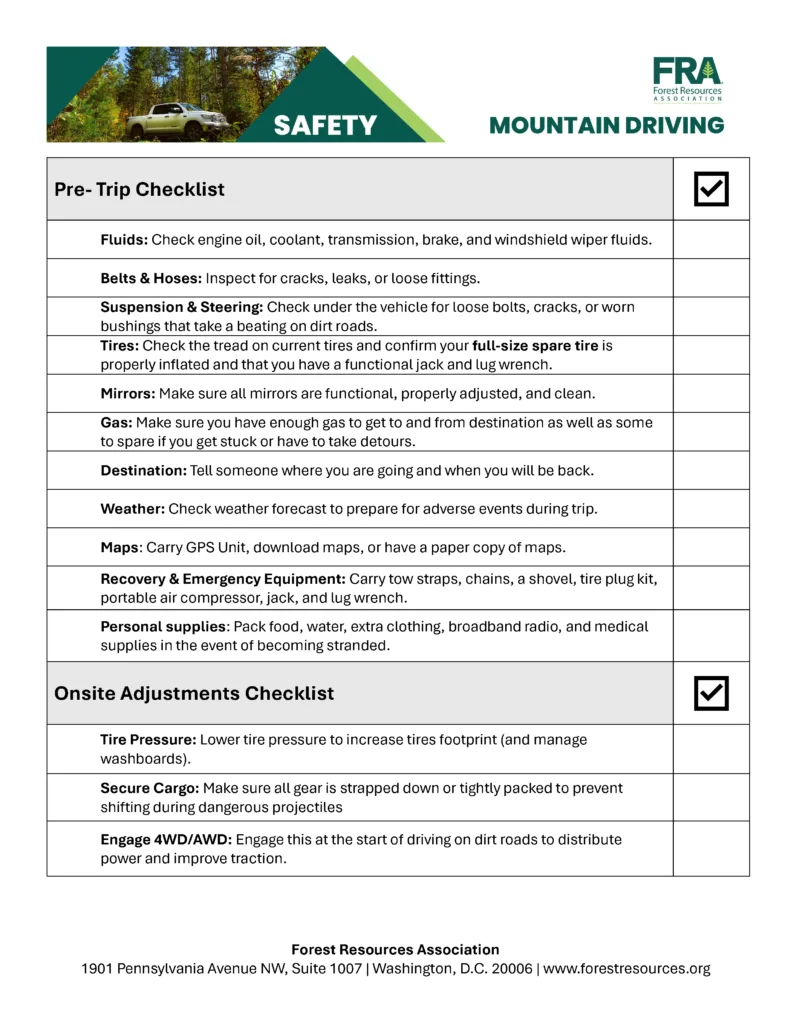
Mountain Driving Checklist