Hiring Is Only Half the Battle: Why Employee Retention Matters More Than Ever
Adapted from an upcoming FRA Technical Release authored by Brian Jackson of Woodjobs.com
Finding qualified employees remains one of the wood products industry’s greatest workforce challenges. Yet hiring is only part of the solution. In today’s competitive labor market, retaining experienced employees has become just as important as recruiting them.
Replacing experienced employees is expensive and time-consuming. Every departure represents more than an empty position. It often means the loss of valuable institutional knowledge, reduced productivity, increased training costs, and additional pressure on the employees who remain. Organizations that successfully retain their workforce understand that retention isn’t driven by a single program or benefit. Instead, it is the result of creating a workplace where employees feel valued, supported, and confident they have opportunities to succeed.
Employee retention begins long before an employee’s first day on the job. Hiring individuals who not only possess the technical skills for a position but also fit the company’s culture leads to stronger engagement, smoother onboarding, and better long-term outcomes. Thoughtful hiring helps reduce turnover by placing employees in roles where they can succeed from the start. For example, selecting a production supervisor who values teamwork and safety as much as efficiency ensures alignment with organizational priorities and fosters lasting commitment.
Competitive compensation also plays a critical role. As labor markets evolve and living costs rise, employers should regularly evaluate wages and benefits to ensure they remain competitive. While compensation alone won’t guarantee loyalty, it provides the foundation for long-term employee satisfaction.
Once employees join the organization, they need to see a future within it. Clearly communicating career paths, offering mentoring opportunities, and investing in ongoing training demonstrate that the company is committed to employee growth. Whether advancing into supervision, maintenance leadership, or management, employees who understand their opportunities for advancement are more likely to remain engaged and invested in the organization’s success.
Providing opportunities for cross-training also benefits both employees and employers. Learning new equipment, processes, or job functions keeps work engaging while expanding employee skills. At the same time, cross-training increases operational flexibility, supports succession planning, and helps prepare future leaders from within the organization.
“Associations such as the Forest Resources Association (FRA) help strengthen employee retention across the forest products supply chain by giving member companies tools, connections, and development opportunities that support a stronger workforce.” – Tim O’Hara, FRA President & CEO
Front-line supervisors have one of the greatest influences on employee retention because they shape the daily work experience. Leaders who recognize accomplishments, address concerns promptly, communicate openly, and encourage employee development build trust and foster positive workplace cultures.
Open and honest communication is especially important during periods of change. Whether introducing new technology, reorganizing departments, or adjusting production schedules, employees appreciate understanding why changes are occurring and how they may be affected. Transparent communication reduces uncertainty, builds trust, and reinforces confidence in organizational leadership.
Recognition should never be underestimated. Celebrating safety achievements, years of service, production milestones, and exceptional performance reinforces a culture of appreciation. Whether formal or informal, consistent recognition helps strengthen morale and encourages employees to build long-term careers with the organization.
During labor shortages, dependable employees often shoulder additional responsibilities to keep operations running. While their dedication is invaluable, relying on the same individuals for extended periods can lead to fatigue, frustration, and ultimately turnover. Monitoring workloads, filling critical vacancies promptly, and providing adequate support helps protect top performers while sustaining long-term productivity.
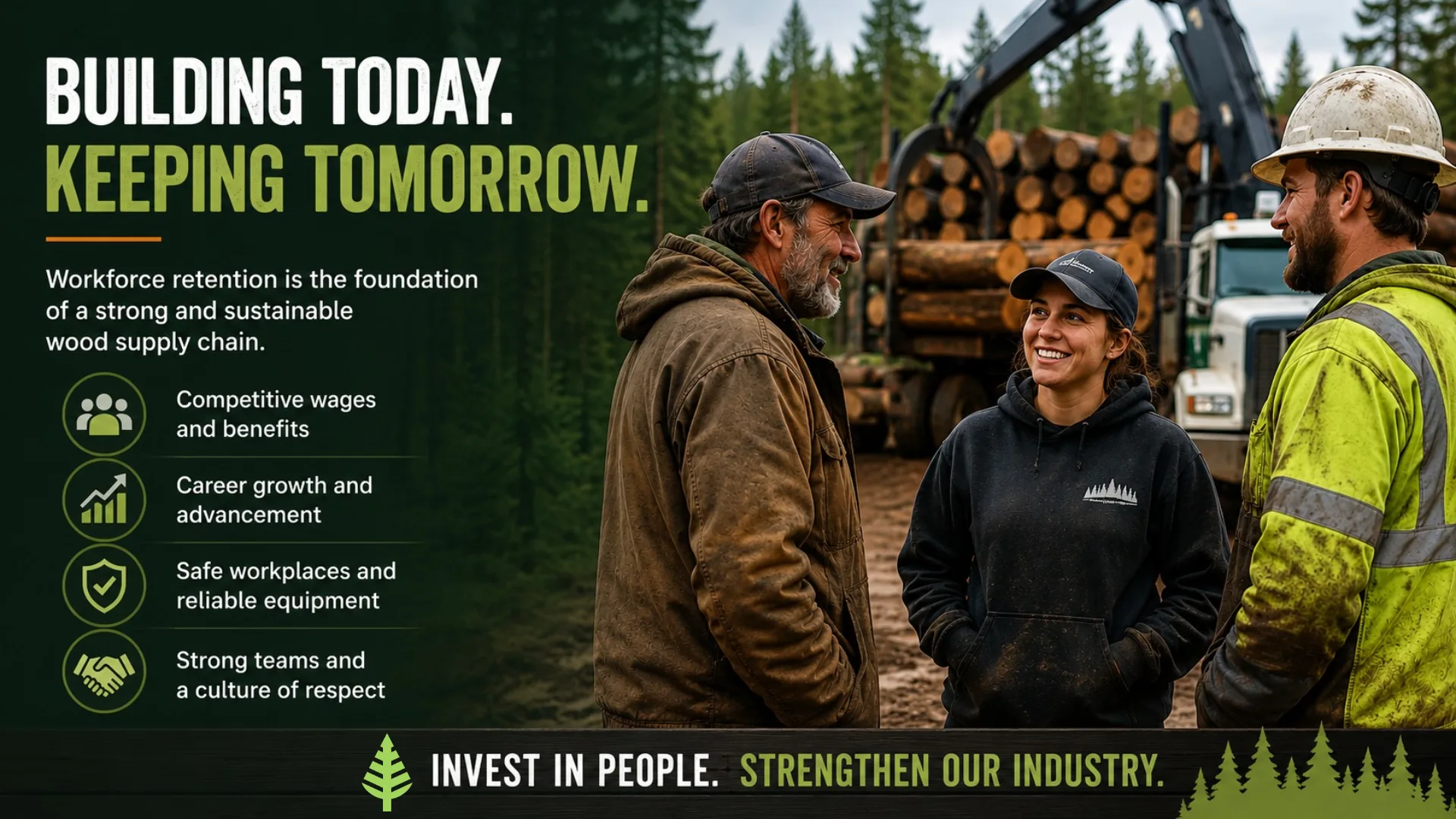
As competition for skilled talent continues, employee retention has become one of the wood products industry’s greatest competitive advantages. Organizations that invest in competitive compensation, thoughtful hiring, leadership development, career growth, employee well-being, open communication, and meaningful recognition create workplaces where employees choose to build long-term careers.
The rewards extend well beyond lower turnover. Retaining experienced employees strengthens safety, improves productivity, preserves critical institutional knowledge, and positions organizations for sustained success in an increasingly competitive marketplace.