Workforce Development in Action: One Student’s Path Through Forestry
As FRA recognizes Workforce Month this July, we’re highlighting the people and opportunities helping strengthen the future of the wood supply chain.
Last week, I visited J&L Trucking, a nominee for FRA’s Appalachian Region Outstanding Logger Award. Jimmie Pennington and his wife, Lucille “Sis” Pennington , work side by side each day promoting proper forest management, safety, and workforce development.
During my visit, I met Andrew Thompson, a senior at Glenville State University in West Virginia, majoring in Natural Resource Management. His path to working with J&L Trucking offers a firsthand look at how industry connections, workforce programs, and hands-on experience can help introduce young people to careers across the wood supply chain.
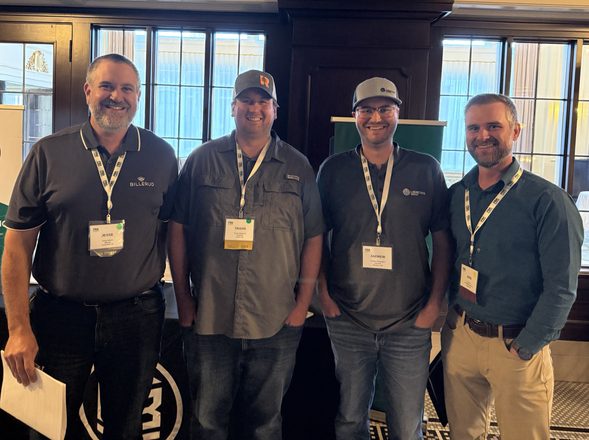
Andrew met the Penningtons last July at the FRA/WVFA Joint Meeting, where they received the West Virginia Forestry Association’s Logger of the Year award. Soon after, Andrew received a grant from High Rocks, an organization whose mission is to educate, empower, and inspire young people in West Virginia. The hope is that if young people work in West Virginia, they will stay in West Virginia. The program provides funding for wages, up to 160 hours, while an individual works with a participating employer.
Andrew reached out to Jimmie, explained the program, and shared his interest in working on a logging operation. He began working with J&L Trucking in January and, when I met him, was working with the crew every Friday.
When I met Andrew, he was wearing chainsaw chaps, a hard hat, gloves, boots, hearing protection, and a tool belt. To me, he looked like a professional timber cutter. Andrew told me Jimmie was serious about safety and that he had learned a great deal about logging.
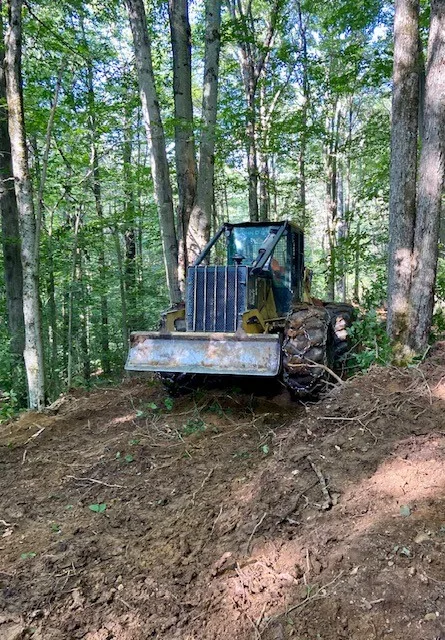
Jimmie is a skilled logger with many years of experience. He has trained Andrew in directional felling, bore cutting, chain filing, escape-route planning, safe limbing, and other essential skills. Lucille operates the skidder and has taught him about setting chokers and pulling cable while cautioning him about the inherent risks of winching trees.
Later, I spoke with Andrew by phone and learned more about his experience across the industry. As part of his studies at Glenville State University, students are required to find a summer internship before graduating. Andrew completed his internship with the West Virginia Division of Forestry, working alongside service foresters and visiting logging jobs in the region.
The foresters took time to explain their work and why Best Management Practices (BMPs) are important. Andrew walked the jobs, completed official forms, and used his judgment to confirm or dispute whether BMPs had been properly used in opening and closing out timber sales. He was also given the responsibility of driving a Division of Forestry pickup truck from home to the logging sites and back again.
During his sophomore year, Andrew worked at Bruce Hardwoods in Beverly, West Virginia. His job involved working outside with the slip-stacker, a machine that automatically stacks lumber on sticks for drying. His supervisor took time to explain the science of lumber grading and the extensive training required to become a lumber grader. Andrew acknowledged that he might be interested in that career.
A college student met a logging family at an industry meeting. A workforce program helped create a paid opportunity. Jimmie and Lucille invested time in teaching him safe logging practices. Service foresters introduced him to BMP implementation and field responsibilities. His experience at Bruce Hardwoods exposed him to lumber grading and another potential career path.
Each experience expanded Andrew’s understanding of the industry and the opportunities within it.
Workforce development does not happen through a single program, employer, or internship. It happens when businesses, schools, organizations, and experienced professionals create opportunities for young people to see the industry firsthand, build real skills, and imagine a future in it.
That same need is reflected in FRA’s leadership on the Jobs in the Woods Act, which would strengthen the forestry workforce by expanding education and training pathways for careers in forestry and the wood products sector. The bill has gained meaningful momentum, with its provisions included in both the House-passed Farm Bill and the Senate Agriculture Committee Chairman’s Farm Bill proposal.
Andrew’s story is a strong example of what can happen when those opportunities connect. If we want to build the workforce of tomorrow, his journey reminds us of the value of investing our time, sharing our knowledge, and opening doors for the next generation.