The Forest Products Industry and Mental Health
Let’s face it, this is not a stress-free industry. Markets are always changing, equipment can break at the least opportune moment, and there’s constant pressure to be 1% more efficient than you were yesterday. While we get to work in the woods and with some great people, it’s an uncontested fact that there are days when it all seems like too much.
May is mental health month, and that’s as (if not more) important to people in the forest industry as most other professions. Stress can build over time and can impact not only our mental health, but also our relationships, our mindset, and our physical health.
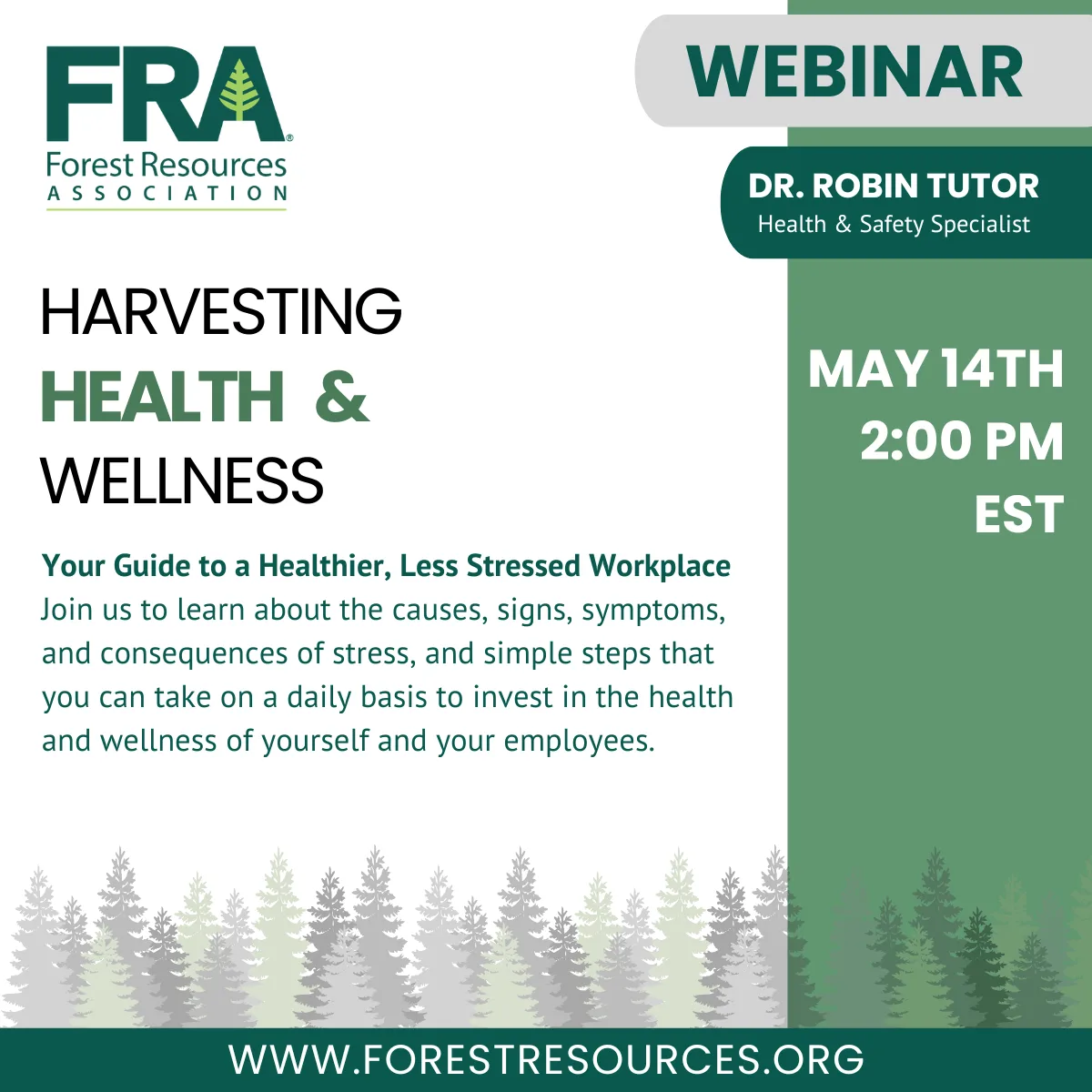
In recognition of Mental Health Month this May, FRA is pleased to host Harvesting Health and Wellness, a special members-only webinar focused on the importance of mental health and well-being in agricultural and forestry communities. The webinar will be held on Thursday, May 14th, at 2:00 PM Eastern.
We are honored to welcome Dr. Robin Tutor, a Health & Safety Specialist with extensive experience supporting farming and logging communities across North Carolina.
Dr. Tutor will share insights on:
- The causes of stress
- The signs and symptoms of stress
- The consequences of unmanaged stress
- Simple, practical steps individuals can take to support daily mental health and wellness
- Strategies employers can use to support employee well-being
- This session will provide valuable guidance for anyone looking to better support themselves, their teams, and the broader workforce.
In my home state of Maine, the Department of Agriculture, Conservation & Forestry has a website dedicated to Mental Health Resources for professionals in forestry and agriculture. It notes that “These industries [agriculture and forestry] are the backbone of Maine’s communities. However, farmers, forest workers, and landowners must balance a myriad of physical, economic, and weather-related challenges.”
The website goes on to provide warning signs of a mental health crisis, offering specific communication, mood, and behavior signs to watch out for – either in yourself or with colleagues. Importantly, mental wellness tips are shared:
- Maintain A Social Network
- Take 15 minutes each day to have an uninterrupted conversation with a family member or friend.
- Don’t shut out family members from your life.
- Maintain friendships and seek opportunities to connect or reconnect with old friends.
- Be Aware
- Know your stressors and how stress manifests in your life.
- Accept that some stress is out of your control. However, make a plan on working towards a solution instead of focusing on what you can’t control.
- Nurture Yourself
- Exercise
- Eat healthy
- Get outside and get some fresh air
- Get enough sleep
- Find hobbies and activities you enjoy
- Set Goals
- Set aside time to plan your day and prioritize your tasks.
- Plan ahead for difficult seasons and delegate work.
- Discuss farm operational needs, but don’t let them occupy all other aspects of life.
- Seek constructive feedback on farm operations for ways to grow or improve.
- If you are feeling overwhelmed, step back. Take a moment to assess the situation and brainstorm solutions. Break those solutions up into manageable steps and take it one step at a time.
- Cultivate a Productive Mind
- Give yourself a break. Take regular 5-to-10-minute breaks to relax and recharge.
- Reach out to professionals with concerns.
- Learn to say no.
- Practice deep breathing and meditation to relax your mind in stressful times and when trying to sleep.
The website also contains links to additional resources – some state-based, but many national.
Mental health isn’t always comfortable to talk about, but there’s no denying that our industry can take a toll on people. I encourage you to be aware of the resources that are available and urge FRA members to join the webinar on Thursday, May 14th, to better equip yourself to support good mental health – both for yourself and those you work with.