Winter 2025/26 – Producers’ Perspectives from the Lake States Region
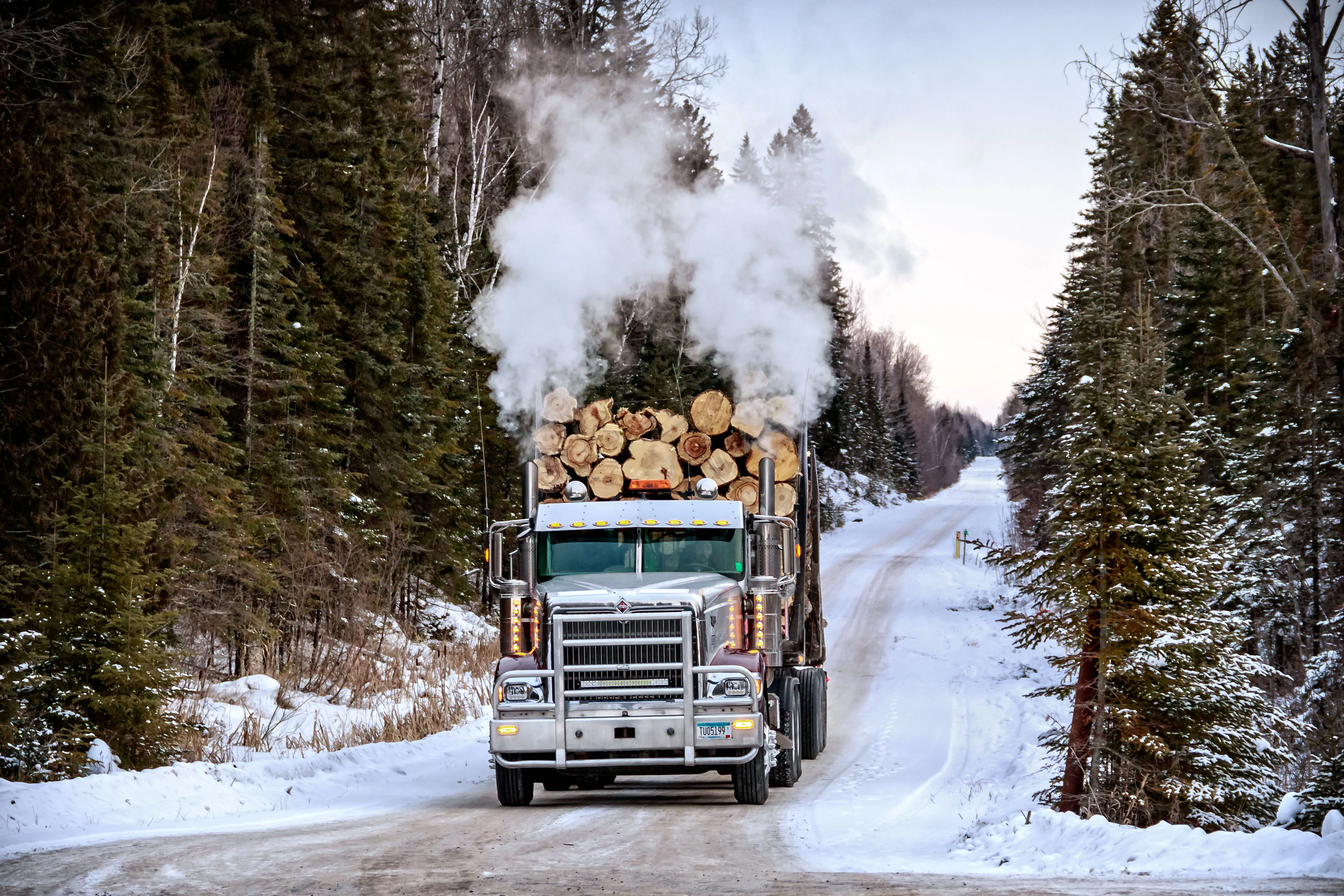
Winter, and the frozen soil conditions it promises, is a critical operating period for the forest products industry in the Lake States region. In Minnesota alone, winter logging accounts for about 53% of the state’s annual wood production — a figure that likely reflects the broader reliance on winter harvest across the northern tier of the region. A good winter can set the stage for a strong year across the entire forestry supply chain. Over the past few weeks, I spoke with several prominent producers from Minnesota, Wisconsin, and Michigan to gather their perspectives on the Winter of 2025/2026. Their experiences revealed both shared struggles and striking regional differences.
Markets were the most persistent challenge across all three states, preventing producers from reaching full capacity. Changing conditions forced repeated adjustments and unplanned moves, chipping away at efficiency before it could build.
Weather, as always, shaped the season — but not uniformly. Wisconsin and Minnesota enjoyed nearly ideal conditions: cold temperatures, manageable snow loads, and a dry fall that set things up well. Conditions were almost too good in some areas, which likely accelerated how quickly certain markets filled. The Upper Peninsula (UP) of Michigan told a different story. Snow arrived early and often, and despite persistent cold, the depth of accumulation prevented swamps and winter roads from freezing efficiently. Significant resources went toward keeping roads plowed and passable, and some jobs remained out of reach entirely. Snow still lingers on the ground in parts of the UP as April comes to a close. Across the region, producers also noted that February thaws, always a fixture of midwestern winters, now seem longer and more intense, making late-winter planning increasingly difficult.
As winter loosened its grip, new pressures emerged. The ongoing conflict with Iran has pushed diesel prices notably higher, squeezing costs both in the woods and on the road. Broader economic headwinds — softening markets, slower construction activity, and lingering uncertainty — added to the weight, with producers in Michigan and Wisconsin feeling the market pressure most acutely.
Still, there were genuine reasons for optimism. Every producer I spoke with kept harvesting wood throughout the season and sold everything they cut. One highlighted a safe winter with no recordable incidents — no small thing in a demanding industry. Easing interest rates have offered welcome relief, allowing some operations to purchase or refinance equipment at reasonable terms, a meaningful development in an environment of rising costs.
And then there is the longer view. One producer put it plainly: with patience and a belief in the supply chain — markets, producers, truckers, and landowners working together — this industry still has the potential to be great. What grounds that belief most concretely for him is what’s coming next. He’s looking forward to the day his sons join him in the woods.
That image — the next generation stepping into the timber — is perhaps the most honest measure of confidence in an industry’s future. Despite a season of real challenges, that confidence remains.
References:
Blinn, C. R. and D. A. Nolle. 2023. Status of the Minnesota Logging Sector in 2021. Department of Forest Resources, University of Minnesota, St. Paul, MN. Staff Paper 113 p.