FRA Brings Its Procurement Short Course to the Lake States
Forestry education provides students with a strong foundation in silviculture, forest management, measurements, ecology, and the many other disciplines needed to manage our forests sustainably. Wood procurement puts many of these pieces together but can be difficult to fully appreciate in the classroom. A procurement forester must understand the landowner’s objectives, the capabilities and economics of the logging contractor, transportation constraints, changing market conditions, and the raw material needs of the mill. Those pieces are interconnected, and decisions made in one part of the system can quickly affect another.
That understanding is valuable whether someone ultimately works as a procurement forester, land manager, consultant, public agency forester, or elsewhere in the forest products industry supply chain. A timber sale can be well designed from a silvicultural standpoint, but it still must be operationally feasible and economically viable to be successfully harvested. That is one reason the Forest Resources Association has made timber harvesting and procurement education a longstanding part of its workforce development efforts. For more than five decades, FRA’s Timber Harvesting and Procurement Short Course has brought together university faculty and experienced forest industry professionals to provide practical education in the business and operational side of forestry. The 2025 course at the University of Georgia marked the program’s 54th offering. It continued a tradition of exposing participants to subjects ranging from harvesting systems and logging economics to transportation, timber appraisal, wood quality, contractor relationships, safety, markets, certification, communications, and negotiation. That successful model is now coming to the Lake States.
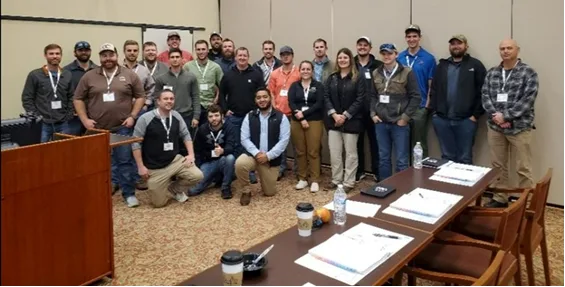
On January 13-15, 2027, FRA will host a Lake States Timber Harvesting and Procurement Short Course at the Kemp Natural Resources Station in Lake Tomahawk, Wisconsin. The three-day program will focus specifically on the economics, challenges, and opportunities associated with harvesting and procuring timber in the Lake States. While the traditional Southern short course provides several days of comprehensive procurement training, the Lake States program is being designed with a particular audience in mind: forestry students, early-career foresters, and professionals currently working adjacent to procurement who want a better understanding of how the wood supply chain functions. Enrollment will be intentionally limited to 25 participants, creating an environment where participants can interact directly with instructors, loggers, land managers, procurement foresters, and other industry professionals. Beyond the technical content, the small class size offers a rare chance to build relationships with industry, agency, academic, and consulting professionals who can serve as resources and mentors long after the course ends. The goal isn’t necessarily to turn 25 participants into procurement foresters, but to help develop 25 forestry professionals who better understand procurement, as procurement impacts all parts of the forest product industry.
Procurement provides a unique window into how the forest products supply chain actually functions. A forester setting up a timber sale influences harvesting productivity. Landowner objectives, regulations, seasonal restrictions, certification requirements, road conditions, haul distances, product specifications, markets, and weather all affect whether material can move economically from the woods to a consuming facility. Materials developed for FRA’s Southern short course illustrate how factors such as tract size, volume per acre, skidding distance, and special operating requirements can influence harvesting costs. Those same materials show how transportation economics are affected by payload, percentage of loaded miles, turn times, haul distance, labor, equipment, fuel, and insurance. The details differ by region, but it is clear across regions that forest management decisions and wood supply economics cannot be completely separated. Understanding those relationships makes someone a better procurement forester, but it can also make someone a better land manager, consulting forester, mill forester, or agency forester. That broader understanding is at the heart of the new Lake States course.
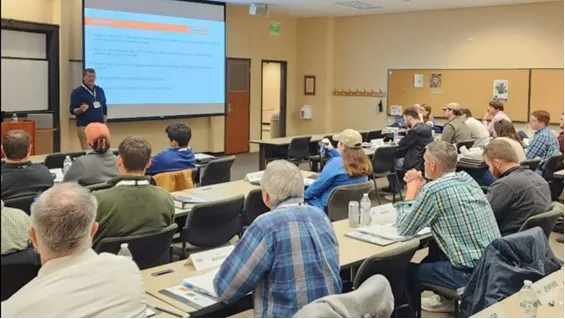
The agenda and speaker slate are still being finalized, but the developing program is expected to begin by establishing the regional context through discussion of Lake States timberland ownership, markets, and the logging sector. From there, participants will explore the economics of the wood supply chain, including landowner considerations, logging production and costs, timber sale characteristics, and factors affecting the commercial viability of timber. The current agenda also incorporates substantial discussion rather than relying solely on presentations. Planned panels and small-group sessions are intended to bring together perspectives from procurement and industry foresters, loggers, consulting foresters, land managers, academia, and other parts of the supply chain. Participants will have opportunities to ask questions and discuss timber-sale setup, wood supply challenges, and the skills the next generation of forestry professionals will need.
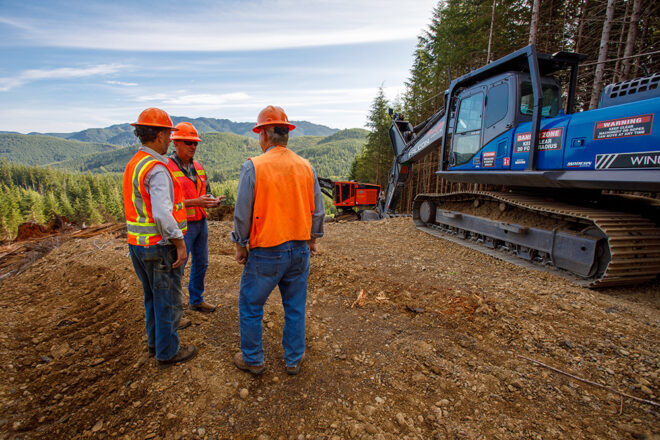
The course is also being structured to get participants out of the classroom. The current draft concludes with a field day incorporating both mill and in-woods perspectives, with a visit to a local lumber mill among the planned activities. Final field-tour details, like portions of the speaker lineup, are still being developed. That classroom-to-field progression will allow participants to discuss harvesting economics in a classroom, hear directly from a logging contractor about what makes a timber sale workable, and then see how tract conditions, equipment, merchandising, transportation, and markets come together in actual operations. Ultimately, that is procurement. It is the interface between forest management and forest products manufacturing, but it is also an interface between people: landowners, foresters, logging contractors, truckers, mill personnel, and ultimately consumers. The Southern procurement course has long emphasized that broader supply-chain perspective. Recent course materials depict procurement in the middle of a system connecting timberland owners, wood buyers, loggers, haulers, mill operations, and downstream markets. They also emphasize that successful wood-flow planning depends on communication and coordination throughout that system, a perspective that is valuable well beyond someone’s job title.
Bringing the short-course concept to the Lake States is also part of a larger workforce development effort. The new course is supported through the same United States Department of Agriculture (USDA) Forest Service workforce grant that supported FRA’s 2025 short course at the University of Georgia. This investment comes at an important time, given the challenges facing the sector, including an aging workforce, competition for workers, and difficulty attracting employees to rural and outdoor occupations. Preparing the next generation means giving young professionals a better understanding of how the pieces of the forest products industry fit together.
For FRA, the Lake States short course is not simply training future procurement foresters. It is an investment in developing forestry professionals who understand what happens after a timber sale is established, why logging contractors make the decisions they do, what determines whether wood can economically reach a mill, and how healthy markets ultimately support active forest management. Some participants will undoubtedly go on to careers in wood procurement. Others may work in public forestry, consulting, land management, research, or other parts of the profession. All of them will interact with the wood supply chain, and the better our next generation of foresters understands that system, the better equipped they will be to make decisions that support productive forests, viable logging and transportation businesses, and a competitive forest products industry.
Registration for the January 13-15, 2027 course is anticipated to open in early December. Enrollment will be limited to 25 participants. The final agenda, speaker lineup, registration details, and additional course information will be released as they are finalized. For more information, please reach out to me directly at (715) 409-8558 or [email protected].