As Summer Winds Down, the Wood Supply Chain Looks Ahead
As summer begins to wind down, the forest products industry is looking toward a busy fall. Across the country, many of the questions facing the wood supply chain are familiar: Where are markets headed? How do we maintain a strong logging and forestry workforce? What role will new technology play? How are policy and regulatory decisions affecting operations? And where are new opportunities for wood fiber emerging?
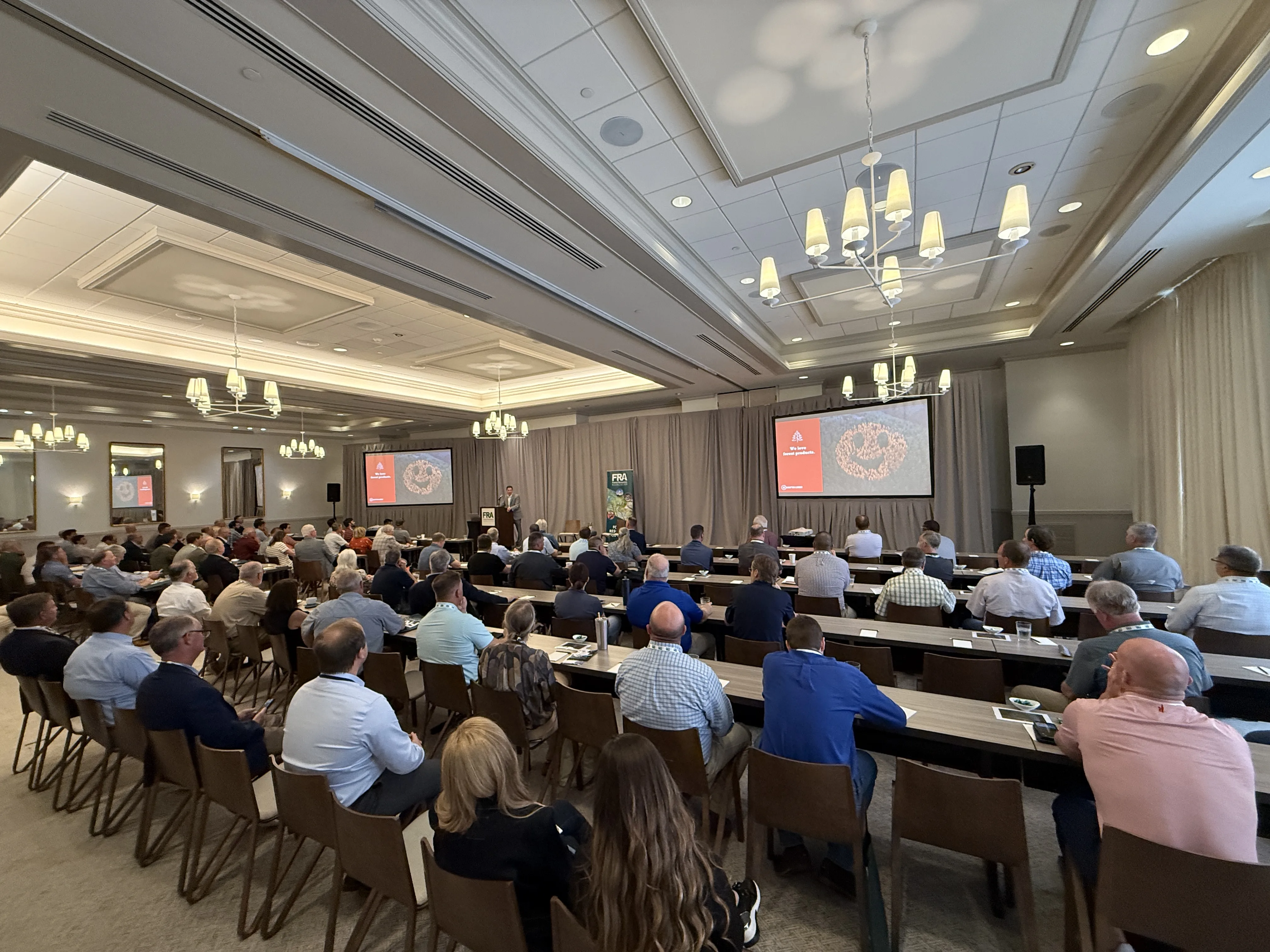
Those questions will be at the center of FRA conversations this fall, beginning with the FRA 2026 Southcentral Region Fall Meeting, September 15–16 in Natchitoches, Louisiana, followed by the FRA 2026 Western Region Fall Meeting, September 16–18 in Redmond, Oregon, and culminating with the FRA 2026 Joint National and Lake States Region Fall Meeting, September 29–October 1 in Green Bay, Wisconsin.
The regional meetings bring regional perspectives to broader industry challenges, while the National Fall Meeting widens the conversation to issues affecting FRA members and the wood supply chain more broadly. Across the agendas, several themes repeatedly come into focus: markets and wood supply, workforce, public policy, technology, and the changing conditions affecting the movement of wood from the forest to the mill.
Markets Remain at the Center
Across the fall agendas, one theme surfaces repeatedly: markets.
In the West, the theme is explicit. The meeting is organized around “The Fiber Equation: Supply, Demand, and Reality,” with Trip Jobe of ResourceWise providing a Northwest forest industry economic update as part of the discussion.
At Southcentral, the conversation will range from fuel-price volatility to mass timber, carbon capture and storage, and forest products innovation. Todd Martin, President & CEO of Southern Loggers Cooperative, will address fuel-price volatility, putting one of those operating pressures directly into the regional discussion.
For an industry built around moving a renewable resource from the woods to the mill, changes in demand, operating costs, and market opportunities can quickly reach multiple points along the supply chain.
But markets are only part of the equation.
In the West, workforce issues also take a prominent role. Sessions on entry-level logger training and workforce retention put attention on the people needed to sustain the industry, while discussions of artificial intelligence and technology and innovation at Roseburg Forest Products look at how the tools used across the sector continue to evolve.
Regional Issues, Broader Implications
Public policy adds another dimension to the issues facing the industry this fall.
Southcentral attendees will hear a Louisiana legislative update from perspectives representing state government, loggers, and the broader forestry community. In the West, the agenda includes an FRA policy update, Pacific Northwest Forest Service updates, and discussion of Washington State’s Np Buffer Rule.
Those regional conversations lead into Green Bay, where the scope begins with the Lake States and then widens. Regional association perspectives, Wisconsin Forests FIRST, a Forest Service update, and hardwood lumber markets provide a look at issues closer to the ground in the Lake States.
From there, the National Fall Meeting moves outward. The national program includes keynote sessions with Doug Schwartz, President of Billerud North America, and Brent Keefer, CEO of American Forest Management. Keefer’s session, “From the Forest to the Mill: The Landowner’s Dilemma and the Future of Wood Supply,” brings questions surrounding the landowner and wood resource directly into the broader supply chain conversation.
Research and markets add another layer to that national picture. Sustainable solutions from the Forest Products Laboratory are part of the program, while Pete Madden, President & CEO of the U.S. Endowment for Forestry and Communities, will focus on “Forest Markets Matter.” National policy is also part of the picture, with a session examining the 2026 midterm elections.
The lens expands further with Pete Stewart, President & CEO of ResourceWise, and “The Global Pulp Market Dynamics: What It Means for the US Wood Supply Chain.” The progression moves from questions about the forest resource itself to the policy, research, markets, and global dynamics surrounding it.
What begins with conditions in individual regions quickly reaches questions about where wood will come from, where it will go, what markets will support it, and what changes will mean for the people and businesses responsible for moving it.
The conversation will continue beyond September, with FRA’s 2026 Southeastern Region and Forest Products Security Group Fall Meeting in October, as well as the FRA 2026 Northeast Region Forestry Forum, which returns to Brewer, Maine, on the first Thursday of each month through April.
As fall approaches, the questions facing the industry may look different depending on the region or where a company sits within the supply chain. But the challenges and opportunities facing one segment rarely exist in isolation.
From the woods to the mill, few of these conversations stand alone.