Today’s Forest Industry is the Foundation for Tomorrow’s
Beginning a little over the past decade, Maine saw paper mills and biomass electric facilities close, often because the products they made were no longer in demand. With a strong concentration in printing and writing grade, Maine suffered mill closures earlier than some other states as communication moved online and fewer people used magazines, telephone books, and written reports. Some smaller biomass electric facilities closed because they were unable to compete on a cost basis with electricity generated by natural gas and other low-cost sources.
As devastating as that was – and the loss of these markets negatively impacted mill workers, landowners, loggers, host communities, and more – from this loss emerged opportunity. Without traditional users of wood consuming the fiber, there have been opportunities for new products and product lines to be developed; some of these have already entered commercial production, some are in development, and yet others are just emerging from university labs.
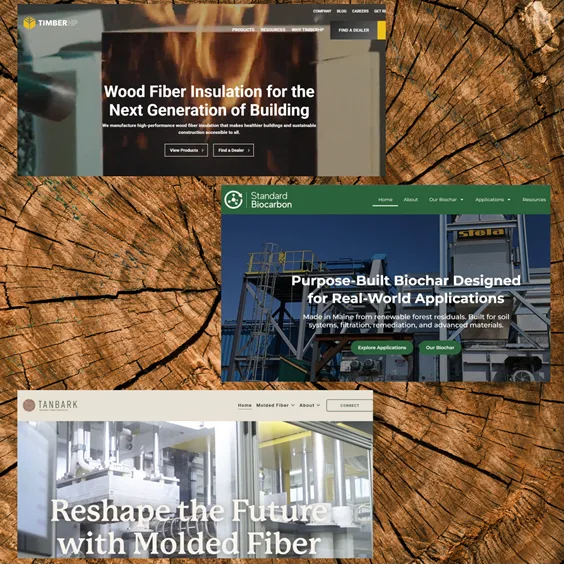
In Maine, a suite of new products has been introduced. We now use wood to produce:
- Insulation made from softwood chips at a former paper mill in Madison,
- Biochar made from sawmill residues, and
TimberHP
Standard Biocarbon
Tanbark
There’s more coming. There are at least two credible biofuel projects under development, both located at the sites of now-closed pulp mills. Developers are looking to bring cross-laminated timber manufacturing to the region, as an alternative to lessen the use of concrete and steel with wood in mid-rise construction. The University of Maine is working to develop an industry using wood fiber in 3-D printed products.
It’s great to see new uses of wood make their way from the lab to the factory floor, but it’s critical to remember that each of these products is built on the foundation provided by the existing forest industry and its supply chain. The existing expertise, equipment, and relationships necessary to grow fiber, harvest it responsibly from well-managed forests, transport it to a manufacturing facility, and create products and byproducts are what allow these new products to come to market. Having a diverse and intact supply chain is a critical and often underappreciated part of developing these new products and new opportunities.
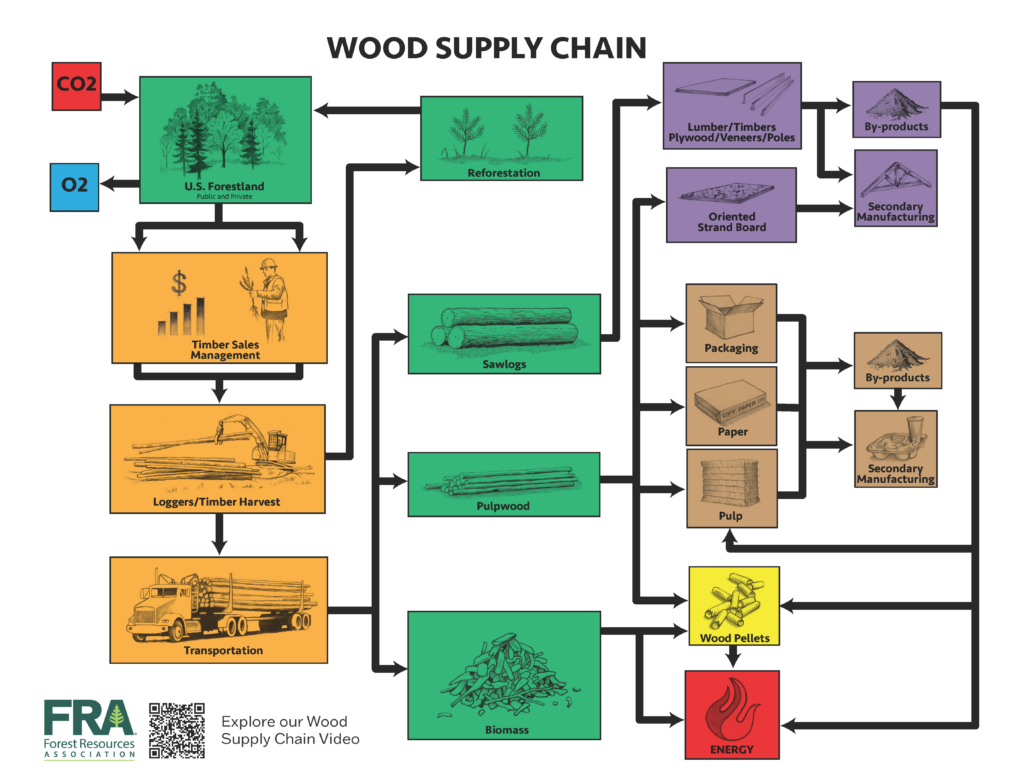
Maine, and the Northeast more broadly, was suffering from loss of markets before many other regions of the country. However, mill closures over the last few years – in pulp and paper, lumber, and other products – suggest that other regions will soon be working aggressively to develop new and innovative products from the unutilized wood now in their region.
Having visited several universities, industry, and government laboratories, I know there is no shortage of ideas and early prototypes demonstrating ways wood can be used to make a range of products. Many of these either displace oil or substitute for competing materials with a high carbon intensity, or both. The next decade will likely see incumbent, adjacent industry, and start-up companies making a wide range of products with wood. For this to happen – for the forest industry to have the opportunity to realize its potential in the coming years – let’s remember that we need so much from the forest landowners, the foresters, the loggers, and the mills that exist today. That’s the foundation that supplies both today’s industry and tomorrow’s.