FRA’s Northeast Region Forest Forum Is an Opportunity for Dialogue
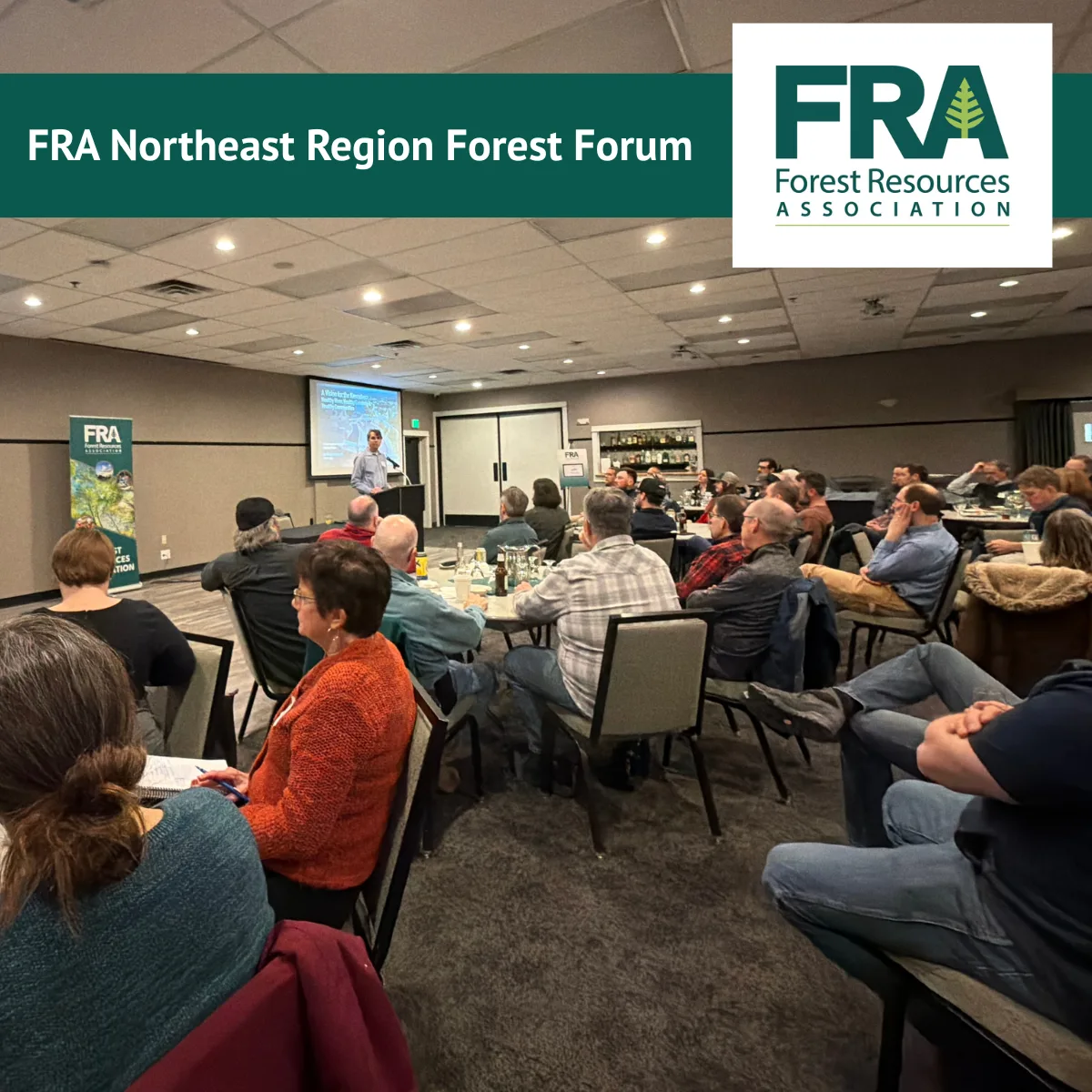
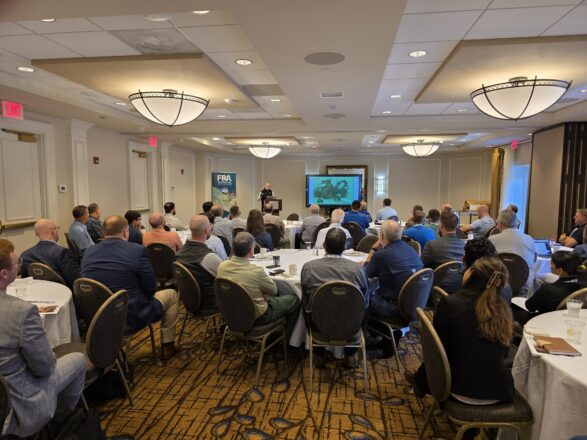
In the Forest Resource Association’s Northeast Region (New England and New York), we get together once a month (October – April) to discuss issues important to the region’s forest industry supply chain. This traditional dinner and speaker event has recently included presentations on tribal forest management, forest inventory trends, wildfire preparation, tariffs and how they work, research and development activities at the University of Maine, and disruptive forces impacting the forest industry. These Forums provide a regular opportunity to share a meal, learn about issues facing the industry, and engage in discussion.
This past week, FRA hosted The Nature Conservancy (TNC) and its partner, the Kennebec River Restoration Trust, to discuss plans to purchase four operating hydroelectric dams along the Kennebec River, with the stated intent of returning the river to a free-flowing state over the next decade or so. While this may not seem like a forest industry supply chain issue, it very much is: SAPPI’s pulp and paper mill in Skowhegan, Maine relies upon one of these – the Shamut Dam – to provide the impoundment needed to get the large volumes of water used in the paper manufacturing process (A brief video SAPPI released earlier this year can be viewed here).
In the short term, TNC notes that nothing will change at these dams for several years, as they will continue to be operated by Brookfield (the current owner and an experienced hydroelectric company). In the long term, TNC and its partners seek to restore free-flowing conditions in this section of the river, working with local communities to restore the river’s ecological health and strengthen the region’s economic vitality.
Given that SAPPI’s mill is the largest wood-using industry in the Northeast, and just completed a half-billion dollar investment in a rebuilt paper machine – TNC’s proposal raised significant concerns not only with SAPPI but throughout the entire Northeast fiber supply chain – landowners, loggers, foresters, sawmills, and even competitors all rely upon this market to operate efficiently. Of course, TNC has been in ongoing (and confidential) conversations with SAPPI, but it’s important to remember that what goes on at the mill impacts forests, communities, and businesses across New England.
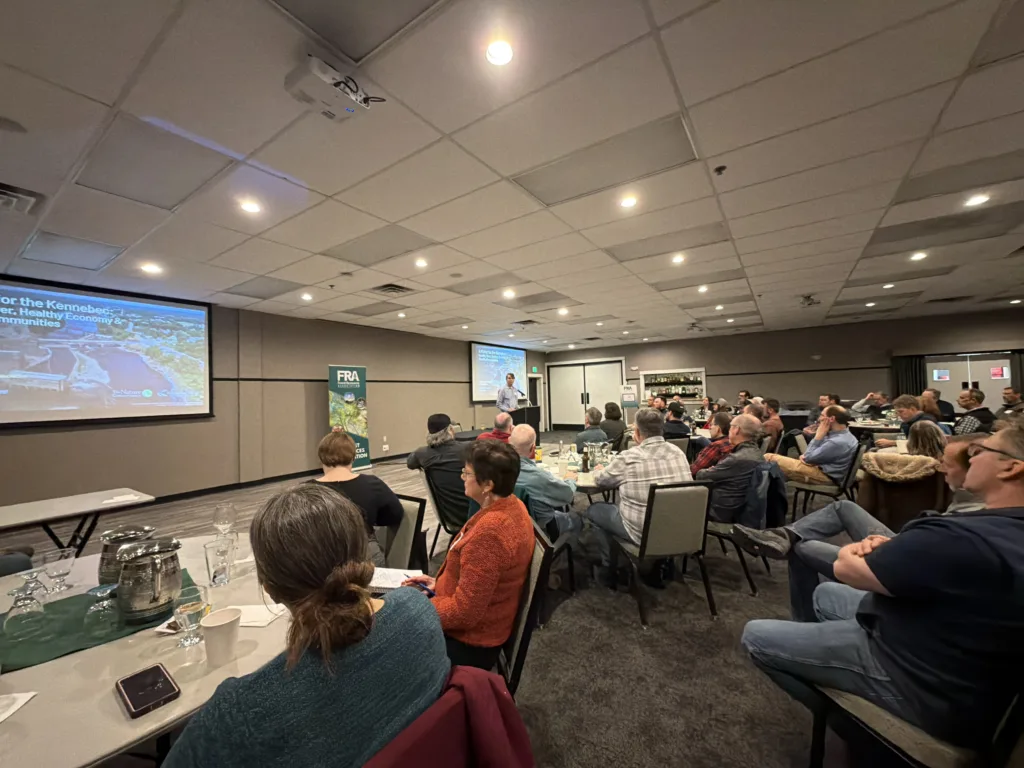
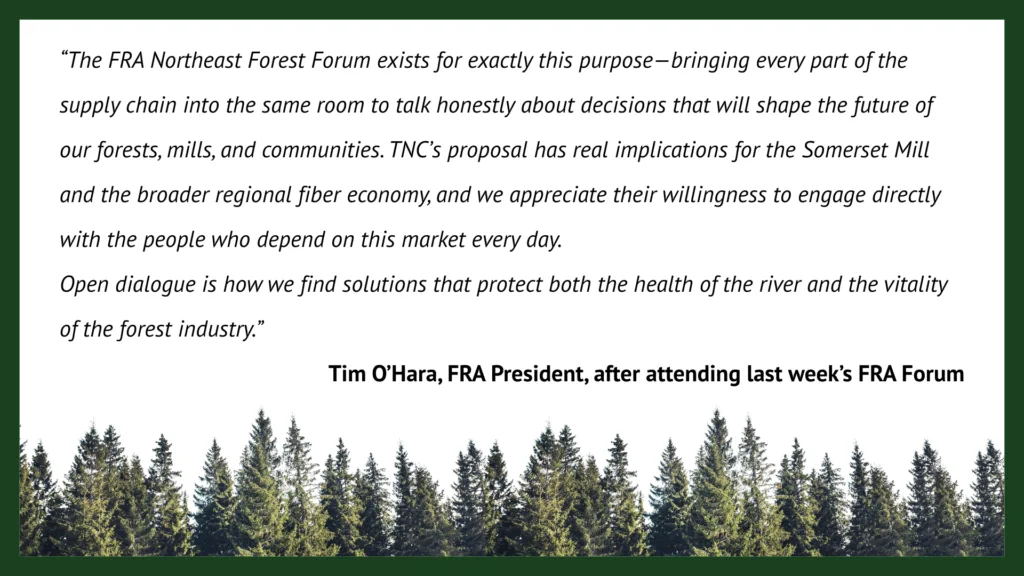
TNC is sensitive to this issue and attended the FRA Forest Forum to present its plan directly to the forest industry supply chain. They emphasized that they have a “100% commitment to develop a plan with SAPPI to ensure the Somerset Mill’s water system needs are fully addressed as part of any long-term river restoration plan. A solution that addresses the mill’s needs and provides safe, timely, and effective passage for sea-run fish like endangered Atlantic salmon is not only possible, but also necessary.” TNC and its partners clearly stated that no plan to decommission the Shawmut Dam will be advanced until a solution is identified that achieves both goals.
It remains to be seen how this issue will be resolved, but it is clear that TNC and its partners are engaging in important dialogue with SAPPI and working to identify a solution that serves both the health of the river and the mill’s operations. FRA provided an opportunity for TNC to share their vision, answer questions, and engage in dialogue with individuals and companies that don’t have a seat at the negotiating table but will be impacted by what happens next. That’s the strength of the monthly Forum, and we look forward to having SAPPI and TNC present together at some point in the future when a solution has been agreed upon that meets all parties’ needs.