From Capitol Hill to Your District: Staying Engaged After the Fly-In
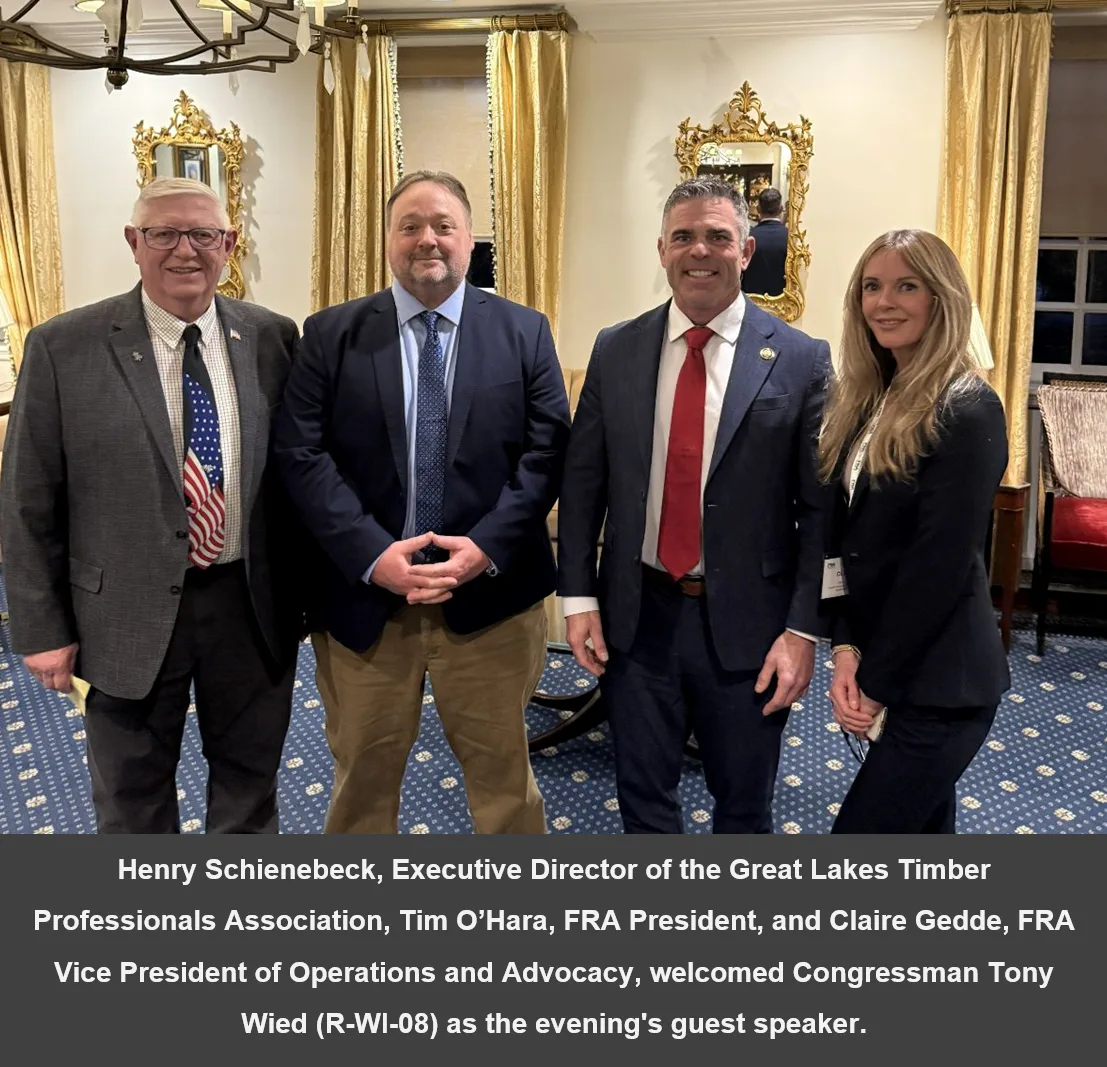
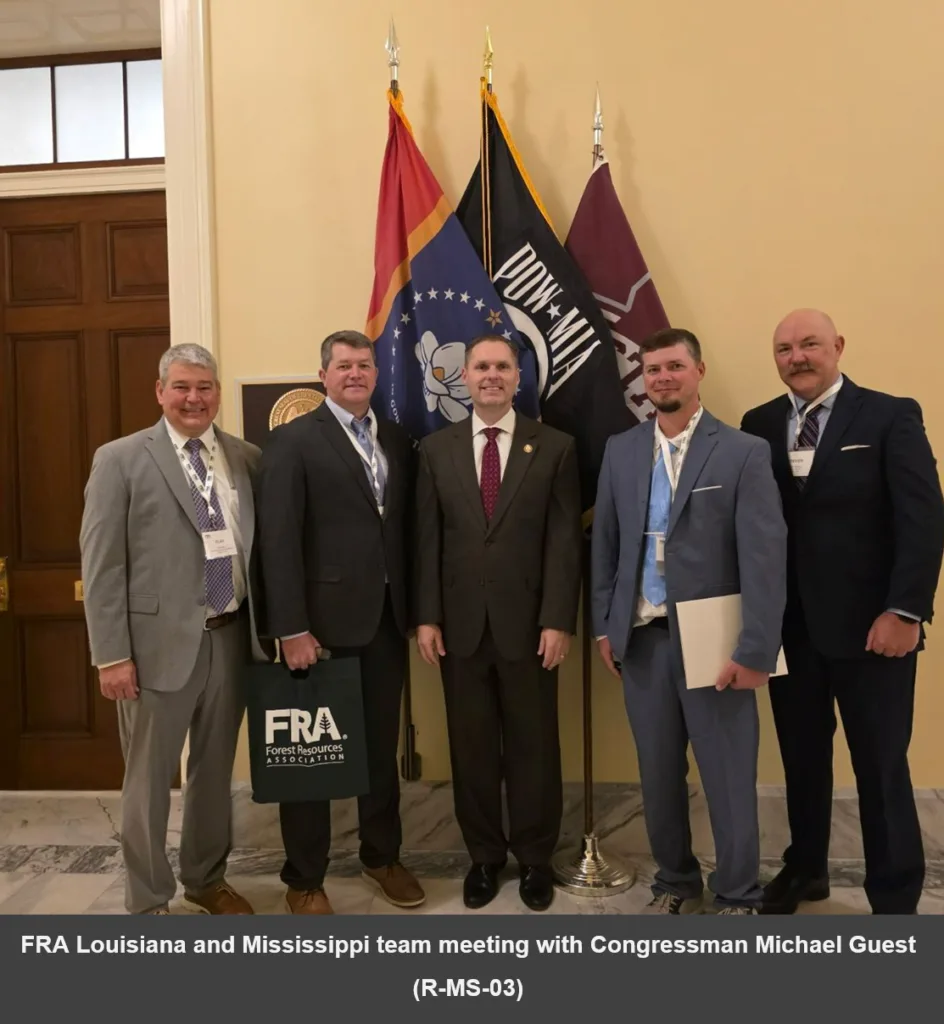
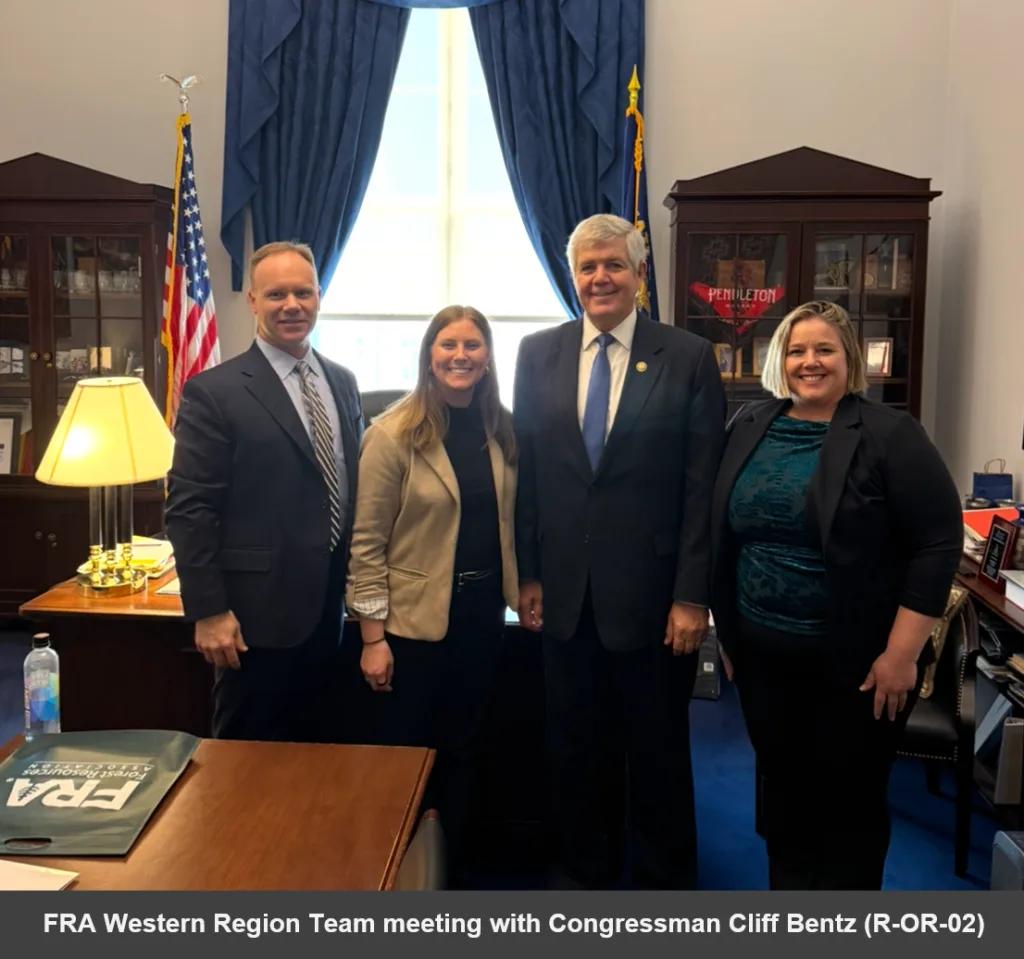
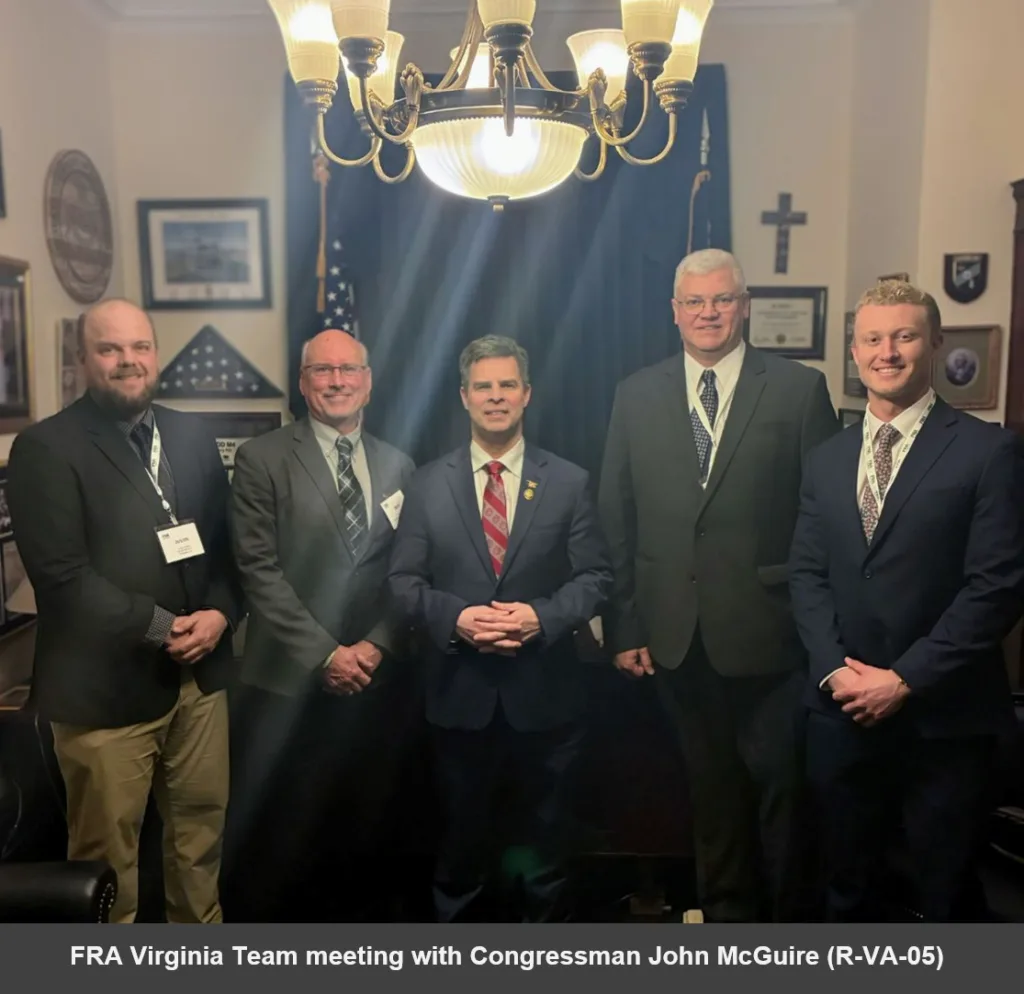
FRA members wrapped up another successful Fly-In yesterday, meeting with Members of Congress and their staff to discuss issues important to the forest products supply chain. Over the course of the event, FRA members participated in more than 90 meetings across the Senate and House, ensuring that forestry’s voice was heard on Capitol Hill.
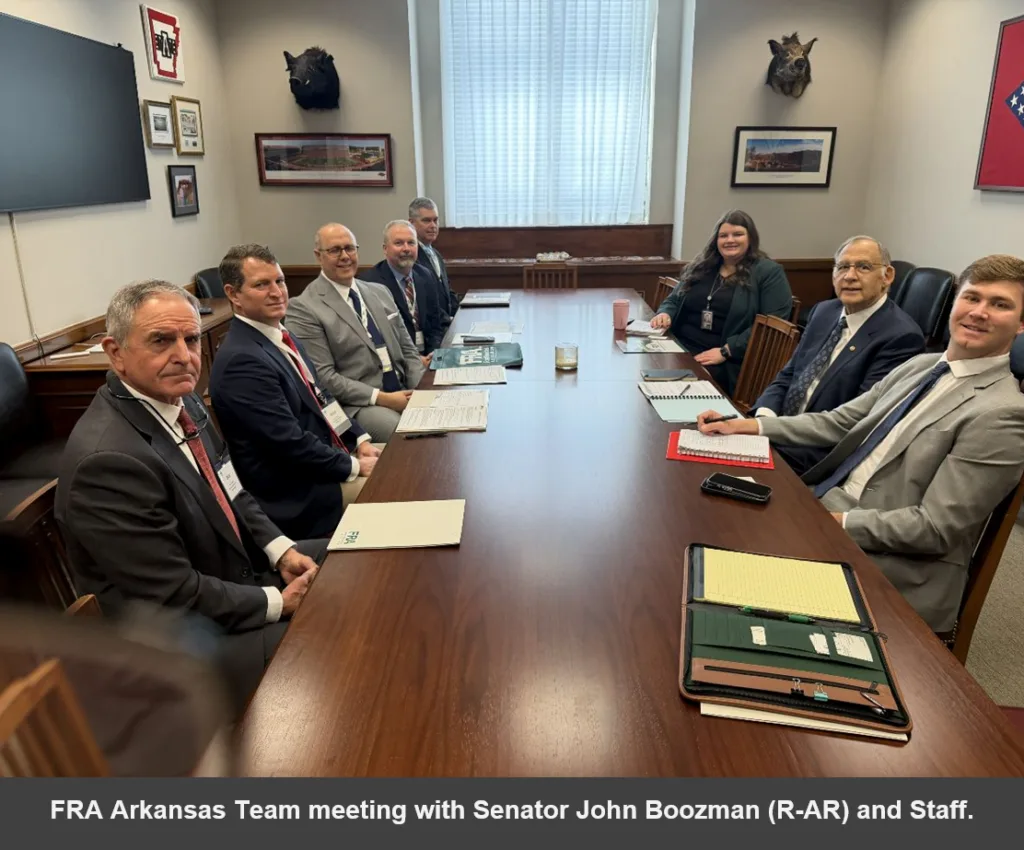
Here are the top issues FRA members highlighted on Capitol Hill during the Fly-In, along with the specific legislation and asks discussed.
Key Fly-In Priorities
1. Jobs in the Woods Act (S. 1336, H.R. 4575)
- Addresses labor shortages impacting forestry and forestry-related industries.
- Provides training opportunities to inspire the next generation of forestry workers.
- Pathway programs allow for immediate job placement.
Sponsors: Senator Angus King (I-ME), Congresswoman Marie Gluesenkamp Perez (D-WA-3)
The Ask: Cosponsor the Jobs in the Woods Act (S. 1336, H.R. 4575)
2. H-2B Guest Worker Visa Reform
- Backlog in reforestation: Currently, there is a 3–5 year delay in tree planting.
- Timely hiring: More H-2B visas are needed so employers can hire non-immigrant guest workers when needed.
- U.S. workforce gap: Only 2% of forestry H-2B jobs are filled by U.S. workers.
The Asks:
- Exempt forestry workers from the H-2B cap to address the reforestation backlog.
- Support a Certified Seasonal Employer exemption in FY 2026 DHS appropriations or spending bills.
- Establish permanent H-2B cap relief.
3. Transportation – Safe Routes Act (S.1063, H.R. 2166)
- Safer highways: Provisions allow trucks transporting logs, pulpwood, chips, or biomass to access the U.S. Interstate Highway System at legal state GVW.
- Efficiency and cost savings: Access to the interstate reduces risks in small towns, lowers fuel use, protects rural roads, and helps small logging businesses stay competitive.
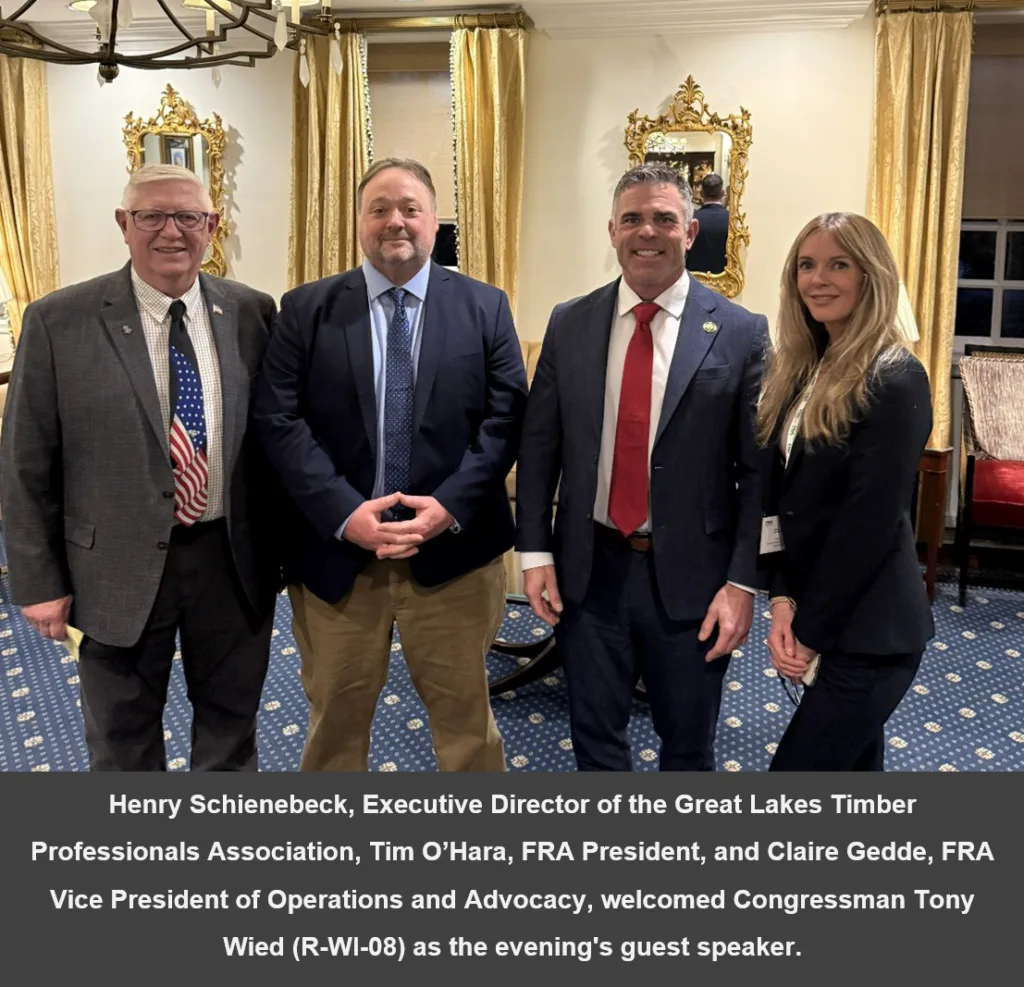
Sponsors: Senator Ron Johnson (R-WI), Representative Tony Wied (R-WI-08)
The Ask:
- Cosponsor the Safe Routes Act (S.1063, H.R. 2166)
- Support legislation allowing trucks to safely haul heavier weights on the Interstate
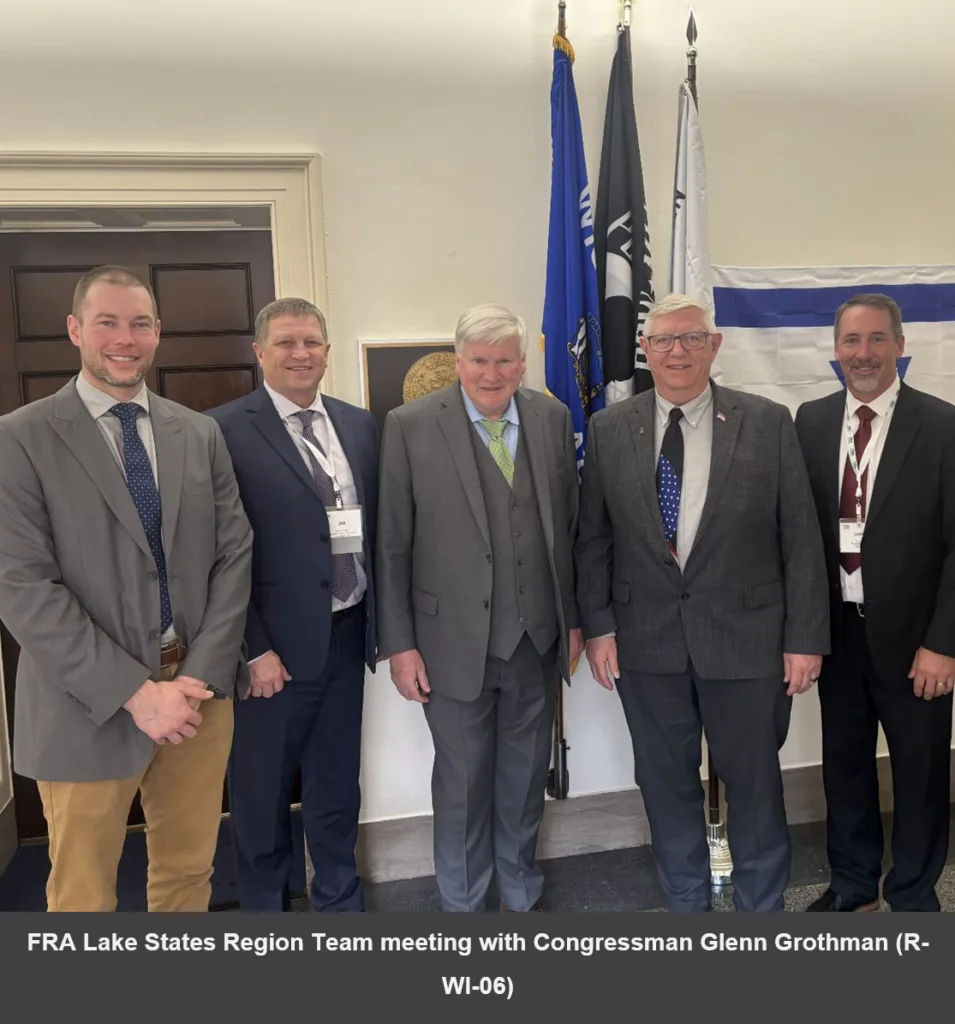
The Fly-In laid important groundwork for advancing our policy priorities. Now, it’s time to build on that momentum by continuing those conversations back home.
I encourage FRA members to keep up the momentum and make a plan to connect with legislators in your state. For national issues, this is your local Member of the U.S. House of Representatives (find yours here) and your two U.S. Senators (find them here). While requesting a meeting might feel intimidating at first, it’s easier than you might think, and these conversations can strengthen relationships that benefit your business, your community, and the forest industry for years to come.
Tips for Meeting with Legislators in Their Districts
- Be confident. You know your business and the forest industry better than anyone—remember that you’re the expert in the room.
- Start with appreciation. Thank the legislator or staff member for taking the time to meet with you.
- Be prepared and concise. Know your topic, stay organized, and keep your message focused. Emphasize how the issue affects your company and the broader forest products supply chain. For example, truck weight limits are a national issue with local impacts.
Here are FRA Resources to help you prepare for these conversations:
FRA Jobs in the Woods Act Issue Brief
FRA Safe Routes Act Issue Brief
- Stay informed. FRA’s Issue Updates provide the latest information on critical legislation to help you stay current.
- Engage with questions. Listen actively, answer with facts, and don’t hesitate to follow up if you need to confirm information later.
- Prepare for differing views. If the legislator seems unsupportive, respond with facts and respectful dialogue.
- Connect it locally. Frame your issue around why it matters to their district; constituent impact drives attention and action. Share your own story and experiences. Talk about your mill, your business, and the people behind it; those are the stories lawmakers remember.
- Value staff connections. If the legislator isn’t available, meet with their staff. They brief the legislator directly and are key allies for ongoing communication.
- Plan ahead. Congressional schedules fill quickly. Members are usually in their districts during holidays, recesses, and often on Mondays and Fridays. You can find schedules at house.gov or senate.gov.
- Extend an invitation. Offer a tour of your mill or an active timber harvest. Seeing your work firsthand makes a lasting impression.
- Follow up. Send a thank-you email after the meeting, reinforce your key points, provide any promised information, and invite them to stay in touch.
Advocacy doesn’t stop when you leave Capitol Hill. Decisions that affect your business, employees, and communities are made throughout the year, and your voice plays a critical role in shaping those outcomes. By meeting with your local legislators, sharing your experiences, and staying engaged on key issues, you help ensure that the forest products industry continues to thrive both nationally and in your own district. If you need support, FRA staff are here to help, whether through your regional manager or our DC office. The relationships you build now can have a lasting impact on policy and the future of our industry.
Advocacy doesn’t stop when you leave Capitol Hill. Decisions that affect your business, employees, and communities are made throughout the year, and your voice plays a critical role in shaping those outcomes. By meeting with your local legislators, sharing your experiences, and staying engaged on key issues, you help ensure that the forest products industry continues to thrive—both nationally and in your own district. If you need support, FRA staff are here to help, whether through your regional manager or our DC office. The relationships you build now can have a lasting impact on policy and the future of our industry.
Additional Reading:
Shaping Policy Through Participation: Making an Impact at the FRA Fly-In