Our Core Advantage – We Are the Market
The forest products industry in the United States has a competitive advantage that cannot be taken away – we are the market. I often use two maps in any presentations I give to illustrate this point – there are precious few places globally where forests and consumers sit atop one another, and we stand out in that regard.
Below is a map of the great forests of the world. Of course, there are forests elsewhere, but this shows the large, contiguous forests that can support a diverse and integrated industry. In the United States, it is clear that the Pacific Northwest, Lakes States, Appalachian forests, and the South are globally significant forest resources. Elsewhere in the world, we see the Amazon Basin, Sub-Saharan Africa, Oceania, and a boreal forest that wraps around the globe from Alaska across Canada to Scandinavia, across Russia to Siberia.
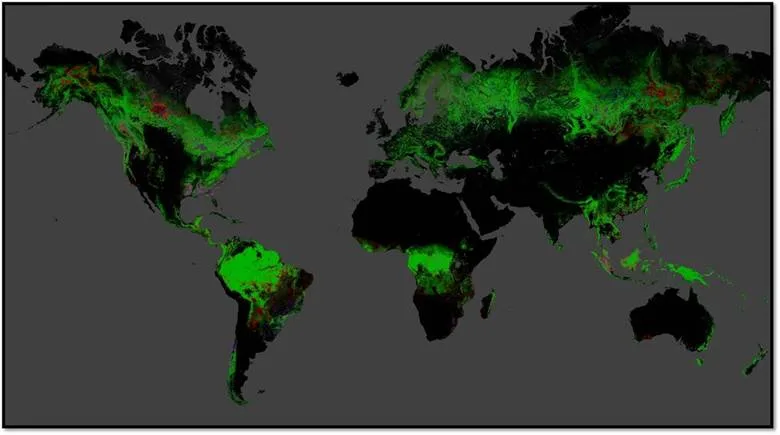
https://www.usgs.gov/media/images/world-forests
That is where the forests are. Where are the consumers? The second map shows consumers – those regions of the world with the density and wealth to leave the lights on all night. Take a quick look, and you will conclude that most of the places that have forests do not have consumers – with the notable exception of the United States.
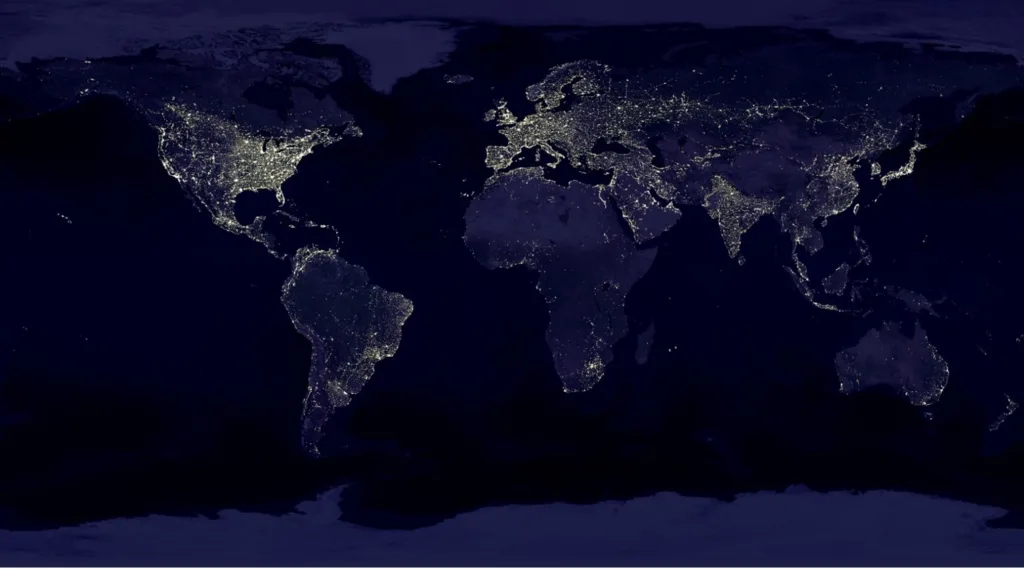
https://science.nasa.gov/earth/earth-observatory/earth-at-night/maps
The forest products industry is in transition, and it can be a challenging industry on many days. With mill closures in all areas of the country, interest rates putting the brakes on housing starts, tariff uncertainty, and a host of other factors, it is easy to focus on the negative. There are other areas of the globe that enjoy some competitive advantage we do not – it may be lower fiber cost, lower regulatory barriers, or lower labor cost. These are real, and in a global marketplace, they matter. These are significant issues – and I do not want to minimize them – but they don’t exist in a vacuum.
What we have here cannot be ignored – we have the forests (and a resilient forest industry supply chain), and we have consumers. We have a land base that grows a diverse range of species, professional managers that combine generations of experience coupled with cutting-edge tools, and a harvesting and transportation system that is safe, efficient, and innovative.
For decades, this has provided an advantage when producing lumber, paper, panels, and other products. In the future, it may expand to wood-based insulation, biofuels, mass timber, or products we haven’t even thought of yet. What we have that others do not is a resource – forests, a large group of people who want to consume what that resource provides, and the supply chain to connect them.